
Exploring Carbon Removal in the Global South
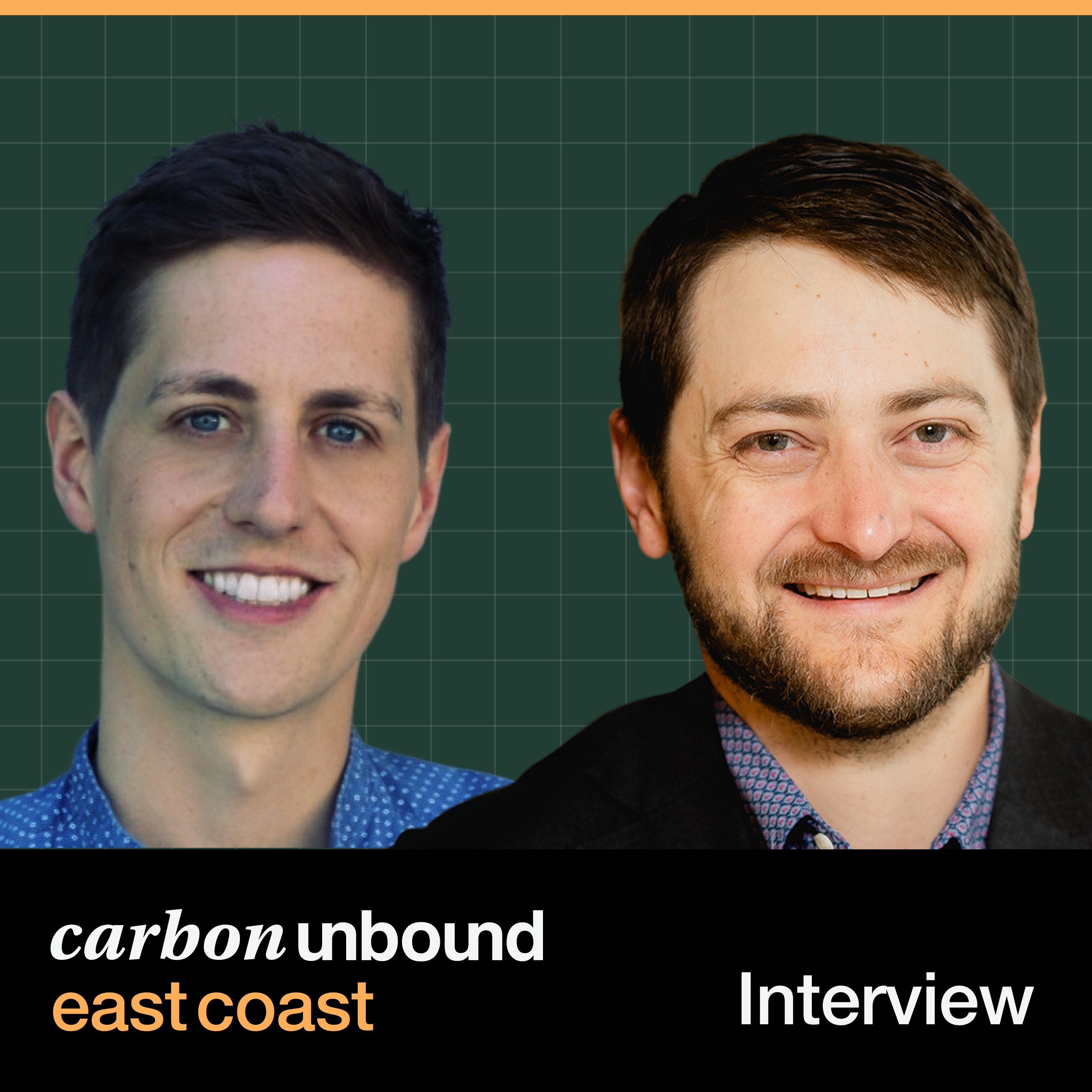
A conversation with Ikarus Janzen, Co-Founder and CCO of Varaha, and David LaGreca, MD of Voluntary Carbon Market Services at EcoEngineers
.png)
.webp)
Exploring Carbon Removal in the Global South
A conversation with Ikarus Janzen, Co-Founder and CCO of Varaha, and David LaGreca, MD of Voluntary Carbon Market Services at EcoEngineers
A conversation with Ikarus Janzen, Co-Founder and CCO of Varaha, and David LaGreca, MD of Voluntary Carbon Market Services at EcoEngineers
A conversation with Ikarus Janzen, Co-Founder and CCO of Varaha, and David LaGreca, MD of Voluntary Carbon Market Services at EcoEngineers
A conversation with Ikarus Janzen, Co-Founder and CCO of Varaha, and David LaGreca, MD of Voluntary Carbon Market Services at EcoEngineers
A conversation with Ikarus Janzen, Co-Founder and CCO of Varaha, and David LaGreca, MD of Voluntary Carbon Market Services at EcoEngineers
A conversation with Ikarus Janzen, Co-Founder and CCO of Varaha, and David LaGreca, MD of Voluntary Carbon Market Services at EcoEngineers
A conversation with Ikarus Janzen, Co-Founder and CCO of Varaha, and David LaGreca, MD of Voluntary Carbon Market Services at EcoEngineers
A conversation with Ikarus Janzen, Co-Founder and CCO of Varaha, and David LaGreca, MD of Voluntary Carbon Market Services at EcoEngineers
A conversation with Ikarus Janzen, Co-Founder and CCO of Varaha, and David LaGreca, MD of Voluntary Carbon Market Services at EcoEngineers
The Global South contains expansive regions with vast biomass, volcanic rock, and agricultural land, holding what two leading practitioners describe as some of the biggest CDR potential in the world. But unlocking that potential requires more than favourable geography. It demands a continued adaptability in methodologies, MRV tools, and developers willing to work directly with communities in environments that global standards were not always designed to anticipate.
Ahead of Carbon Unbound East Coast, we sat down with Ikarus Janzen, Co-Founder and Chief Commercial Officer of Varaha and David LaGreca, Managing Director of Voluntary Carbon Market Services at EcoEngineers, to explore what carbon removal looks like on the ground in the Global South, and what it means for buyers, investors, and standards bodies navigating this market in 2026.
Interview Chapters
00:00 Introduction
01:07 Why the Global South?
03:03 Exploring the co-benefits: soil health, water retention, climate adaptation
05:38 Are co-benefit claims audited with the same rigour as MRV?
09:55 Standards built in the Global North: do they serve Global South projects?
13:18 Self-reporting, low-trust environments, and the limits of methodology
16:05 What buyers need to believe about smallholder farmer projects in India
20:25 Risk, resilience, and the case for distributed over concentrated
23:06 Navigating political and climate volatility in the Global South
23:57 The first treadmill panel on the East Coast?
Why the Global South
When asked what drew them to the Global South as the place where carbon removal needed to happen, both David and Ikarus pointed to the same fundamentals: biomass, land, energy, and in the case of enhanced rock weathering, volcanic rock. As Ikarus put it, if you look at where carbon removal makes the most sense, where you have the most potential, India and Brazil are among the countries that offer the biggest potential in the world.
But for India in particular, Ikarus noted that the opportunity had long been held back by low trust and a legacy of lower-quality projects. What has changed, he argues, is the arrival of a new cohort of methodologies, developers, and MRV tools capable of delivering that potential with integrity. His view: most of the carbon removal will happen in the tropical and subtropical world in the future.
David added a dimension that surprised him when he first started operating in these markets: the human resources. The quality and drive of the people you work with in India and across these locations, he said, creates a real capability for uplift which can be found even beyond the carbon context. For instance, carbon finance can improve the daily lives of communities where access to clean water, sanitation, and economic opportunity remains constrained.
The ability to introduce carbon finance and level up on the lifestyle of the populations and communities in these areas is exceptional. - David LaGreca, EcoEngineers

Co-Benefits: What's Being Measured and What Isn't
One of the more candid exchanges in the conversation came when the question of co-benefit auditing was raised. Are social and ecological co-benefits like soil health, water retention, community livelihoods being verified with the same rigour as carbon MRV?
David's answer was direct: they're not. Outside biodiversity standards, co-benefit claims are typically described and evidenced rather than quantified to the same degree as carbon removal. The tools exist, but they're not as widely used. The market, he observed, is organised around carbon as the unit of transaction. Since it is an intangible asset, everything flows through MRV. Co-benefits are what companies talk about in their sustainability reports, but the hard rigour sits with the carbon accounting.
Ikarus reframed this question in terms of project design. For a project working with thousands of smallholder farmers to succeed, the incentives have to be genuinely aligned with communities, and that alignment is reflected in the project's longevity. If the trees are still standing after 20 years, it is because someone has been on the ground for 20 years talking with every community around the project sites. A project's survival hinges upon how well it serves its community, and as such, should not be considered a secondary metric.
Are Standards Built in the Global North Serving Global South Projects?
The conversation turned to standards, and in particular, how most CDR standards were designed with Global North contexts in mind. When you try to apply a rainforest restoration protocol to a smallholder farm in India, Ikarus explained, there are inevitably points where the methodology simply does not describe what you are trying to do on the ground.
David was measured in his assessment. Standards bodies are broadly doing a reasonable job and are generally open to feedback, he said. The real challenge is more subtle: standards written in high-trust societies sometimes fail to account for the different incentive structures in environments where self-reporting is less reliable. For example, when a standard body asks why anyone would put a wrong number in, the response from the field was: why wouldn't they, if they get money for it? Self-reporting may satisfy a methodology, but it is not sufficient for project integrity.
He also raised a striking practical constraint. In mangrove projects in Bengal, there are areas with tigers. Sampling protocols that require frequent field visits can put people unnecessarily at risk. The registries working on those projects have had to adapt, and in his experience, the better ones are open to doing so.
Standards are always trying to play catch up with how projects are actually implemented. The history of carbon markets is trying to find a rigorous enough standard that can still be applied to on the ground realities. - David LaGreca, EcoEngineers
What Buyers Need to Believe
For buyers contemplating long-term offtake from smallholder farmer projects in India, Ikarus described a spectrum. Many buyers are satisfied if the right boxes are ticked. Thus, working with intermediaries to support portfolio building is a reasonable approach for this group. However, more sophisticated buyers with the resources to go deeper uniformly recognise India as a significant CDR opportunity offering cost-competitive credits with genuine integrity, once they understand what is different now versus the past.
The specific concern most buyers raise, he noted, is farmer dropout risk. If a farmer decides to leave a project, there is almost no legal recourse. His answer is project design: if the project genuinely aligns incentives with farmers, so that continuing is in their interest even after carbon revenues mature, then dropout risk is actually lower than in concentrated land-owner projects. A single land-owner in the US, Australia, or Brazil withdrawing could remove 20 to 50% of a project area overnight. In contrast, an individual smallholder farmer in India exiting represents less than 1% of the project. In this way, fragmentation can actually create project resilience.
David echoed this by noting the broader trust environment. The carbon market is currently a low-trust environment, necessitating multiple stages of scrutiny before capital is deployed. qBuyers are right to be thorough. The solution, he argues, is to design projects that hold up under scrutiny rather than to resist it.
Volatility and Adaptation
One of the most vivid moments in the conversation came when David described just how rapidly conditions can change in Global South project environments. At the time of recording, India was rationing liquid fuels for cooking. This rationing was direct result of the Iran war that had begun three weeks prior. That kind of political and climate volatility, he argued, means that understanding and responding to risks is at least as important as the carbon removal methodology itself. The design has to be critical, and you have to update it based on on the ground realities, because things shift rapidly.
What They're Looking Forward to at Carbon Unbound East Coast
Both David and Ikarus were enthusiastic about the upcoming event in New York.
According to David,
I call it the 'Carbon Unbound circuit'. I love seeing all the people on repeat and we get about 30-40% new people every time. So it's a really great friendship circle [...] New York's always a little bit more heavy on the investor side too, so I'm looking forward to getting their perspectives and seeing what's driving them directly these days. - David LaGreca, EcoEngineers
And for Ikarus,
I always enjoy it, and it gives me a great excuse to go to New York and see everyone in carbon there. It's one of these very attractive events that gets everyone together. - Ikarus Janzen, Varaha
The conversation continues in New York at Carbon Unbound East Coast on May 19 & 20th, where both David and Ikarus will be speaking. Book your ticket now.
The Global South contains expansive regions with vast biomass, volcanic rock, and agricultural land, holding what two leading practitioners describe as some of the biggest CDR potential in the world. But unlocking that potential requires more than favourable geography. It demands a continued adaptability in methodologies, MRV tools, and developers willing to work directly with communities in environments that global standards were not always designed to anticipate.
Ahead of Carbon Unbound East Coast, we sat down with Ikarus Janzen, Co-Founder and Chief Commercial Officer of Varaha and David LaGreca, Managing Director of Voluntary Carbon Market Services at EcoEngineers, to explore what carbon removal looks like on the ground in the Global South, and what it means for buyers, investors, and standards bodies navigating this market in 2026.
Interview Chapters
00:00 Introduction
01:07 Why the Global South?
03:03 Exploring the co-benefits: soil health, water retention, climate adaptation
05:38 Are co-benefit claims audited with the same rigour as MRV?
09:55 Standards built in the Global North: do they serve Global South projects?
13:18 Self-reporting, low-trust environments, and the limits of methodology
16:05 What buyers need to believe about smallholder farmer projects in India
20:25 Risk, resilience, and the case for distributed over concentrated
23:06 Navigating political and climate volatility in the Global South
23:57 The first treadmill panel on the East Coast?
Why the Global South
When asked what drew them to the Global South as the place where carbon removal needed to happen, both David and Ikarus pointed to the same fundamentals: biomass, land, energy, and in the case of enhanced rock weathering, volcanic rock. As Ikarus put it, if you look at where carbon removal makes the most sense, where you have the most potential, India and Brazil are among the countries that offer the biggest potential in the world.
But for India in particular, Ikarus noted that the opportunity had long been held back by low trust and a legacy of lower-quality projects. What has changed, he argues, is the arrival of a new cohort of methodologies, developers, and MRV tools capable of delivering that potential with integrity. His view: most of the carbon removal will happen in the tropical and subtropical world in the future.
David added a dimension that surprised him when he first started operating in these markets: the human resources. The quality and drive of the people you work with in India and across these locations, he said, creates a real capability for uplift which can be found even beyond the carbon context. For instance, carbon finance can improve the daily lives of communities where access to clean water, sanitation, and economic opportunity remains constrained.
The ability to introduce carbon finance and level up on the lifestyle of the populations and communities in these areas is exceptional. - David LaGreca, EcoEngineers
Co-Benefits: What's Being Measured and What Isn't
One of the more candid exchanges in the conversation came when the question of co-benefit auditing was raised. Are social and ecological co-benefits like soil health, water retention, community livelihoods being verified with the same rigour as carbon MRV?
David's answer was direct: they're not. Outside biodiversity standards, co-benefit claims are typically described and evidenced rather than quantified to the same degree as carbon removal. The tools exist, but they're not as widely used. The market, he observed, is organised around carbon as the unit of transaction. Since it is an intangible asset, everything flows through MRV. Co-benefits are what companies talk about in their sustainability reports, but the hard rigour sits with the carbon accounting.
Ikarus reframed this question in terms of project design. For a project working with thousands of smallholder farmers to succeed, the incentives have to be genuinely aligned with communities, and that alignment is reflected in the project's longevity. If the trees are still standing after 20 years, it is because someone has been on the ground for 20 years talking with every community around the project sites. A project's survival hinges upon how well it serves its community, and as such, should not be considered a secondary metric.
Are Standards Built in the Global North Serving Global South Projects?
The conversation turned to standards, and in particular, how most CDR standards were designed with Global North contexts in mind. When you try to apply a rainforest restoration protocol to a smallholder farm in India, Ikarus explained, there are inevitably points where the methodology simply does not describe what you are trying to do on the ground.
David was measured in his assessment. Standards bodies are broadly doing a reasonable job and are generally open to feedback, he said. The real challenge is more subtle: standards written in high-trust societies sometimes fail to account for the different incentive structures in environments where self-reporting is less reliable. For example, when a standard body asks why anyone would put a wrong number in, the response from the field was: why wouldn't they, if they get money for it? Self-reporting may satisfy a methodology, but it is not sufficient for project integrity.
He also raised a striking practical constraint. In mangrove projects in Bengal, there are areas with tigers. Sampling protocols that require frequent field visits can put people unnecessarily at risk. The registries working on those projects have had to adapt, and in his experience, the better ones are open to doing so.
Standards are always trying to play catch up with how projects are actually implemented. The history of carbon markets is trying to find a rigorous enough standard that can still be applied to on the ground realities. - David LaGreca, EcoEngineers
What Buyers Need to Believe
For buyers contemplating long-term offtake from smallholder farmer projects in India, Ikarus described a spectrum. Many buyers are satisfied if the right boxes are ticked. Thus, working with intermediaries to support portfolio building is a reasonable approach for this group. However, more sophisticated buyers with the resources to go deeper uniformly recognise India as a significant CDR opportunity offering cost-competitive credits with genuine integrity, once they understand what is different now versus the past.
The specific concern most buyers raise, he noted, is farmer dropout risk. If a farmer decides to leave a project, there is almost no legal recourse. His answer is project design: if the project genuinely aligns incentives with farmers, so that continuing is in their interest even after carbon revenues mature, then dropout risk is actually lower than in concentrated land-owner projects. A single land-owner in the US, Australia, or Brazil withdrawing could remove 20 to 50% of a project area overnight. In contrast, an individual smallholder farmer in India exiting represents less than 1% of the project. In this way, fragmentation can actually create project resilience.
David echoed this by noting the broader trust environment. The carbon market is currently a low-trust environment, necessitating multiple stages of scrutiny before capital is deployed. qBuyers are right to be thorough. The solution, he argues, is to design projects that hold up under scrutiny rather than to resist it.
Volatility and Adaptation
One of the most vivid moments in the conversation came when David described just how rapidly conditions can change in Global South project environments. At the time of recording, India was rationing liquid fuels for cooking. This rationing was direct result of the Iran war that had begun three weeks prior. That kind of political and climate volatility, he argued, means that understanding and responding to risks is at least as important as the carbon removal methodology itself. The design has to be critical, and you have to update it based on on the ground realities, because things shift rapidly.
What They're Looking Forward to at Carbon Unbound East Coast
Both David and Ikarus were enthusiastic about the upcoming event in New York.
According to David,
I call it the 'Carbon Unbound circuit'. I love seeing all the people on repeat and we get about 30-40% new people every time. So it's a really great friendship circle [...] New York's always a little bit more heavy on the investor side too, so I'm looking forward to getting their perspectives and seeing what's driving them directly these days. - David LaGreca, EcoEngineers
And for Ikarus,
I always enjoy it, and it gives me a great excuse to go to New York and see everyone in carbon there. It's one of these very attractive events that gets everyone together. - Ikarus Janzen, Varaha
The conversation continues in New York at Carbon Unbound East Coast on May 19 & 20th, where both David and Ikarus will be speaking. Book your ticket now.
.png)
.png)


.webp)