
.png)
.png)
.png)

.png)

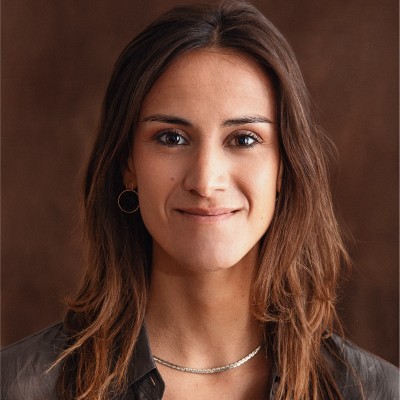
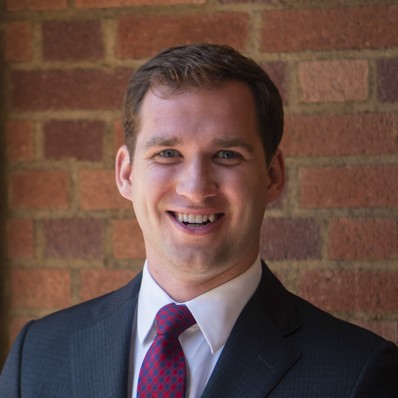


How ChrysaLabs and Cultivo are Scaling High-Integrity Soil Carbon
ChrysaLabs and Cultivo break down the science and economics behind scaling high-integrity soil carbon removals.
ChrysaLabs and Cultivo break down the science and economics behind scaling high-integrity soil carbon removals.
ChrysaLabs and Cultivo break down the science and economics behind scaling high-integrity soil carbon removals.
ChrysaLabs and Cultivo break down the science and economics behind scaling high-integrity soil carbon removals.
ChrysaLabs and Cultivo break down the science and economics behind scaling high-integrity soil carbon removals.
ChrysaLabs and Cultivo break down the science and economics behind scaling high-integrity soil carbon removals.
ChrysaLabs and Cultivo break down the science and economics behind scaling high-integrity soil carbon removals.
ChrysaLabs and Cultivo break down the science and economics behind scaling high-integrity soil carbon removals.
ChrysaLabs and Cultivo break down the science and economics behind scaling high-integrity soil carbon removals.
We interviewed ChrysaLabs and Cultivo to learn how they are solving the biggest problem in soil carbon: balancing high-quality science with real-world costs. In this joint showcase, they share how combining smart land planning with AI-powered soil scanning lowers risks, cuts costs for local farmers, and provides the trusted proof that premium corporate buyers now demand.
Baselines & Additionality: Bridging the Gap
How does deploying AI-powered, in-field proximal sensing technology reduce the margin of error when establishing these initial baselines?
ChrysaLabs responds
The core challenge in soil carbon baselining isn't data collection, it's uncertainty management. Traditional lab workflows impose a hard cost ceiling on sampling density: every point sent to the lab adds cost, which forces project developers to work with fewer observations than the science demands. Fewer points means wider confidence intervals, which translates directly into baseline uncertainty, and in carbon markets, uncertainty is the real cost, not the opex per sample.
ChrysaLabs' Direct Contact Proximal Sensing breaks that ceiling. Because a probe scan costs a fraction of a laboratory analysis, project teams can collect significantly more spatial data points within the same MRV budget. When combined with stratified sampling designs, this density increase produces meaningfully tighter error bounds around the carbon stock estimate.
Critically, we don't replace lab samples: we amplify them. A proportion of points are always co-sampled against laboratory analysis, which serves as the ground truth for local model calibration. Our predictive models are then fine-tuned to the specific soil type, ecosystem, and climate of each project area. This local calibration step is particularly important in ecologically diverse environments, tropical soils, arid grasslands, deep rangeland profiles, where global transfer models systematically underperform. The result is a baseline that satisfies both the scientific rigour that standards like VM0042 require and the operational scalability that makes large, remote projects feasible.
As a project developer focused on nature-based removals, how do you navigate the historical baseline challenge when scaling regenerative agriculture projects in regions with sparse or unreliable soil data?
Cultivo responds
To navigate sparse or unreliable regional data when baseline sampling, Cultivo utilizes available high resolution satellite imagery and remote sensing data to map and stratify landscapes into homogeneous areas based on soil-impacting factors. From there, we prioritize targeted on-the-ground pre-sampling to "ground truth" and test the soil directly. These initial physical samples allow us to validate our landscape mapping, directly informing the design of our full, reliable baseline sampling campaigns.
Permanence and Reversal Risk
How does high-frequency, full-profile soil scanning help detect organic matter fluctuations and soil health trends before a potential reversal becomes a financial issue for project developers?
ChrysaLabs responds
Reversal risk rarely arrives suddenly, it builds gradually through subtle shifts in soil organic matter that are invisible without frequent, depth-resolved measurement. Traditional monitoring protocols rely on periodic lab sampling at fixed intervals, creating detection windows where a reversal can accumulate for months or years before it surfaces. By then, it has become both a scientific problem and a financial one.
Full-profile, in-field scanning changes the economics of monitoring frequency. Because each scan costs dramatically less than a lab submission, project developers can monitor more often and at greater depth, reaching 60cm, 90cm, or deeper, well beyond the surface horizons that most standard protocols focus on. This depth dimension matters: carbon sequestered deeper in the soil profile is generally more stable, bound to mineral particles rather than labile organic fractions that oxidize quickly under disturbance, drought, or tillage stress.
By tracking full-profile organic matter trends across multiple monitoring cycles, ChrysaLabs gives project developers an early warning system. If surface SOC begins to decline while deeper mineral-associated fractions remain stable, that signal can trigger a management intervention before it triggers a buffer pool draw. For sophisticated buyers who want verifiable evidence of long-term durability, not just a credit issuance date, this kind of longitudinal, depth-disaggregated data is increasingly what differentiates a premium asset from a commodity credit.
Since soil carbon can be susceptible to natural or human disturbances, how do you design projects for long-term permanence and manage reversal risk for premium carbon credits?
Cultivo responds
To ensure long-term permanence, Cultivo structures projects around 40-year land stewardship agreements backed by robust legal provisions. These contracts establish a shared commitment to carbon durability; land stewards cannot terminate the agreement without cause unless they return the project's financial benefits. We mitigate unexpected reversal risks by contributing a percentage of credits to an insurance buffer pool, and Cultivo intends to pilot a warranty for non-reversals to provide a market-based mechanism that ensures credit durability after the official crediting term ends.
Crucially, the regenerative practices we fund are inherently "sticky." Because we partner with multi-generational, family-run operations, once ranchers experience the direct benefits - primarily increased forage productivity and land appreciation - the practices can naturally continue beyond contact term.
On a scientific level, managed rotational grazing builds deep, resilient soil organic carbon that naturally hedges against drought and climate volatility. We can validate this durability by integrating density fractionation testing to isolate mineral-associated organic matter, which binds tightly to clay and silt. Documenting increases in this specific, stable carbon pool provides premium buyers with verifiable proof that the sequestered carbon will persist for the long haul.
Cost, Scale, and Financial Viability for Farmers
Rigorous baseline sampling is non-negotiable for high-integrity credits, but MRV campaigns in remote or ecologically diverse landscapes can be complex and resource-intensive to design. How does in-field proximal sensing help project developers build smarter, more cost-efficient sampling strategies, without compromising the data quality that standards and buyers require?
ChrysaLabs responds
The bottleneck to scaling carbon projects isn't really willingness from farmers or demand from buyers, it's the cost and complexity of designing MRV campaigns that are both scientifically defensible and operationally feasible across diverse, often remote landscapes. In ecologically heterogeneous environments like rangeland grasslands, designing a sampling campaign without prior spatial data is a high-stakes guess: too few points and you miss variability; too many and the project economics collapse.
In-field proximal sensing changes the design logic entirely. Rather than committing upfront to a full baseline sampling grid based on maps and assumptions, project developers can use probe scans during an initial pre-sampling phase to rapidly characterize carbon variability across a site, before finalizing stratification and deciding where to concentrate lab analysis. This means lab samples are allocated where they generate the most scientific value: to validate the probe model locally and confirm the stratification, not to cover the entire landscape by brute force.
That local calibration step is critical, and it's why we don't position in-field sensing as a replacement for laboratory analysis. Soil variability globally is too high for a plug-and-play approach. Tropical soils, arid grasslands, deep organic profiles each behave differently, and a model calibrated on temperate cropland will systematically underperform on them. By ground-truthing probe predictions against a targeted set of lab samples specific to each project area, we get the performance of a full lab campaign at a fraction of the point count, and that's a Verra-approved approach. The result is a sampling design that is both more rigorous and more scalable, opening up project economics in geographies that would otherwise be too costly to certify.
Cultivo transforms degraded landscapes into thriving carbon sinks while delivering social and ecological co-benefits. How do you ensure the economic and social impacts of these projects actually reach local and small-scale farmers?
Cultivo responds
At Cultivo, we ensure lasting value for land stewards by focusing on deeply collaborative, ongoing project design. Rather than relying solely on carbon payouts – which are a helpful supplement but rarely life-changing on their own – we conduct intensive consultation workshops where all land stewards directly shape the operational plan. We also deliver immediate, tangible economic assistance by funding upfront capital costs for critical infrastructure like virtual fencing and drought-resilient water systems. Furthermore, we protect the ranch's social and operational fabric, and help ranchers plan for the future, by providing custom technical advisory services, including data tracking and drought mitigation plans, ensuring family operations stay viable, productive, and in local hands.
Future of the Market & Scope 3
How are corporate buyers’ preferences evolving at Carbon Unbound? Are they leaning more toward the pure quantification of carbon, or are they increasingly looking for the holistic soil health and biodiversity data that both of your platforms provide?
ChrysaLabs responds
The buyers we see moving fastest aren't choosing between rigour and narrative: they're demanding both, because they've learned they need both. Conversations we've had recently with teams at large corporate buyers make this concrete: the most sophisticated purchasers in the market today evaluate soil carbon projects against two distinct derisking axes, durability of storage and MRV quality, and they apply scrutiny that goes well beyond registry minimums. They're asking about equivalent soil mass methodology, deeper core sampling, fractionation experiments, and statistically robust sampling designs. Carbon quantification isn't just a box to check; it's a gate. Without credible MRV, the conversation doesn't start.
But MRV quality alone doesn't close a deal. Those same buyers are also assessing co-benefits: community engagement, biodiversity uplift, land stewardship resilience, as part of their due diligence. The framing we find useful internally is what our team calls "right to play versus right to win." Rigorous, uncertainty-bounded carbon quantification is the right to play. The co-benefits are what differentiate a credit worth featuring in an annual report from one worth quietly holding.
What's changed in the last 12-18 months is that buyers are now increasingly willing to accept measurement technologies that go beyond traditional lab workflows, provided those technologies are properly grounded in foundational science. Near-infrared sensing, for example, is gaining acceptance among leading buyers when validated against dry combustion lab results and deployed with conservative, documented uncertainty budgets. What we hear consistently is that they want full traceability: from field sampling through lab cross-validation to final uncertainty deduction, and that a well-documented, conservative approach earns more trust than a suspiciously low uncertainty figure.
From a measurement standpoint, this is precisely where ChrysaLabs operates. Our in-field sensors capture carbon behaviour at depth in 6-inch increments, beyond what traditional sampling provides, increasing confidence in both the magnitude and durability of sequestration claims. When that data sits transparently alongside lab validation results, the MRV stack tells a coherent, defensible story. And that same field data: soil texture, organic matter fractions, compaction indicators, also feeds the co-benefit narrative that corporate buyers want to communicate externally. The rigour and the story come from the same scan.
Cultivo responds
Corporate buyers don't view carbon quantification, holistic soil health, or biodiversity data as separate concerns. Historically, these buyers have questioned whether soil organic carbon projects can accurately measure sequestered carbon. But today, advanced soil and biodiversity measurement technologies improve a project's MMRV, and comprehensive project data gives buyers much more confidence that the carbon removals they are purchasing are real, additional, and durable.
What's Next for Carbon Removals?
What are you most excited about at Carbon Unbound Europe, and what key topic do you expect to shape the next phase of carbon removals?
ChrysaLabs responds
For the whole team at ChrysaLabs, the next chapter is definitely soil carbon as an asset class.
We're most excited about the maturation of the conversation around measurement quality, specifically, the growing recognition that credit integrity starts in the field, not in the registry.
For most of the past decade, market discussions around permanence, additionality, and reversal risk have been largely methodological: which standard to apply, which buffer to maintain. Carbon Unbound Europe signals a shift toward something more operational: how do you actually know, with defensible field data, that the carbon is where you say it is, stable, and real?
That's the question we work on every day. And we think the next phase of the carbon market, particularly in soil, will be shaped by buyers and standards bodies demanding measurement-backed claims rather than model-backed proxies. Soil carbon has historically lagged behind other removal pathways because it was perceived as too hard to measure at scale. In-field sensing technology has changed that calculus. The same rigour that makes a forestry project bankable is now achievable for grassland and regenerative agriculture projects, at scale, in the field, in regions where lab infrastructure doesn't exist.
Europe, where the regulatory environment is already raising the bar on environmental claims substantiation, feels like exactly the right room to make that case. We expect precision soil measurement to move from a competitive differentiator to a baseline expectation, and we're here for it.
Cultivo responds
We’re excited to track how companies work within the next generation of standards and frameworks to incorporate carbon removals into their decarbonization strategies. In particular, with the release of SBTi’s V2 standard introducing the Ongoing Emissions Responsibility (OER) framework, we expect the next phase of carbon markets to be driven by companies opting into the Engaged, Advanced, and Leadership participation tiers, enabling them to begin funding carbon removals and high-integrity avoidance in advance of their net-zero targets.
Similarly, we look forward to the release of the ISO Net Zero standard, which will provide another tool to help companies confidently integrate carbon removals into their decarbonization pathways. Carbon Unbound events offer a valuable forum to hear directly from corporate sustainability leaders about how they are interpreting these evolving frameworks and shaping their long-term carbon procurement strategies.
.png)
We interviewed ChrysaLabs and Cultivo to learn how they are solving the biggest problem in soil carbon: balancing high-quality science with real-world costs. In this joint showcase, they share how combining smart land planning with AI-powered soil scanning lowers risks, cuts costs for local farmers, and provides the trusted proof that premium corporate buyers now demand.
Baselines & Additionality: Bridging the Gap
How does deploying AI-powered, in-field proximal sensing technology reduce the margin of error when establishing these initial baselines?
ChrysaLabs responds
The core challenge in soil carbon baselining isn't data collection, it's uncertainty management. Traditional lab workflows impose a hard cost ceiling on sampling density: every point sent to the lab adds cost, which forces project developers to work with fewer observations than the science demands. Fewer points means wider confidence intervals, which translates directly into baseline uncertainty, and in carbon markets, uncertainty is the real cost, not the opex per sample.
ChrysaLabs' Direct Contact Proximal Sensing breaks that ceiling. Because a probe scan costs a fraction of a laboratory analysis, project teams can collect significantly more spatial data points within the same MRV budget. When combined with stratified sampling designs, this density increase produces meaningfully tighter error bounds around the carbon stock estimate.
Critically, we don't replace lab samples: we amplify them. A proportion of points are always co-sampled against laboratory analysis, which serves as the ground truth for local model calibration. Our predictive models are then fine-tuned to the specific soil type, ecosystem, and climate of each project area. This local calibration step is particularly important in ecologically diverse environments, tropical soils, arid grasslands, deep rangeland profiles, where global transfer models systematically underperform. The result is a baseline that satisfies both the scientific rigour that standards like VM0042 require and the operational scalability that makes large, remote projects feasible.
As a project developer focused on nature-based removals, how do you navigate the historical baseline challenge when scaling regenerative agriculture projects in regions with sparse or unreliable soil data?
Cultivo responds
To navigate sparse or unreliable regional data when baseline sampling, Cultivo utilizes available high resolution satellite imagery and remote sensing data to map and stratify landscapes into homogeneous areas based on soil-impacting factors. From there, we prioritize targeted on-the-ground pre-sampling to "ground truth" and test the soil directly. These initial physical samples allow us to validate our landscape mapping, directly informing the design of our full, reliable baseline sampling campaigns.
Permanence and Reversal Risk
How does high-frequency, full-profile soil scanning help detect organic matter fluctuations and soil health trends before a potential reversal becomes a financial issue for project developers?
ChrysaLabs responds
Reversal risk rarely arrives suddenly, it builds gradually through subtle shifts in soil organic matter that are invisible without frequent, depth-resolved measurement. Traditional monitoring protocols rely on periodic lab sampling at fixed intervals, creating detection windows where a reversal can accumulate for months or years before it surfaces. By then, it has become both a scientific problem and a financial one.
Full-profile, in-field scanning changes the economics of monitoring frequency. Because each scan costs dramatically less than a lab submission, project developers can monitor more often and at greater depth, reaching 60cm, 90cm, or deeper, well beyond the surface horizons that most standard protocols focus on. This depth dimension matters: carbon sequestered deeper in the soil profile is generally more stable, bound to mineral particles rather than labile organic fractions that oxidize quickly under disturbance, drought, or tillage stress.
By tracking full-profile organic matter trends across multiple monitoring cycles, ChrysaLabs gives project developers an early warning system. If surface SOC begins to decline while deeper mineral-associated fractions remain stable, that signal can trigger a management intervention before it triggers a buffer pool draw. For sophisticated buyers who want verifiable evidence of long-term durability, not just a credit issuance date, this kind of longitudinal, depth-disaggregated data is increasingly what differentiates a premium asset from a commodity credit.
Since soil carbon can be susceptible to natural or human disturbances, how do you design projects for long-term permanence and manage reversal risk for premium carbon credits?
Cultivo responds
To ensure long-term permanence, Cultivo structures projects around 40-year land stewardship agreements backed by robust legal provisions. These contracts establish a shared commitment to carbon durability; land stewards cannot terminate the agreement without cause unless they return the project's financial benefits. We mitigate unexpected reversal risks by contributing a percentage of credits to an insurance buffer pool, and Cultivo intends to pilot a warranty for non-reversals to provide a market-based mechanism that ensures credit durability after the official crediting term ends.
Crucially, the regenerative practices we fund are inherently "sticky." Because we partner with multi-generational, family-run operations, once ranchers experience the direct benefits - primarily increased forage productivity and land appreciation - the practices can naturally continue beyond contact term.
On a scientific level, managed rotational grazing builds deep, resilient soil organic carbon that naturally hedges against drought and climate volatility. We can validate this durability by integrating density fractionation testing to isolate mineral-associated organic matter, which binds tightly to clay and silt. Documenting increases in this specific, stable carbon pool provides premium buyers with verifiable proof that the sequestered carbon will persist for the long haul.
Cost, Scale, and Financial Viability for Farmers
Rigorous baseline sampling is non-negotiable for high-integrity credits, but MRV campaigns in remote or ecologically diverse landscapes can be complex and resource-intensive to design. How does in-field proximal sensing help project developers build smarter, more cost-efficient sampling strategies, without compromising the data quality that standards and buyers require?
ChrysaLabs responds
The bottleneck to scaling carbon projects isn't really willingness from farmers or demand from buyers, it's the cost and complexity of designing MRV campaigns that are both scientifically defensible and operationally feasible across diverse, often remote landscapes. In ecologically heterogeneous environments like rangeland grasslands, designing a sampling campaign without prior spatial data is a high-stakes guess: too few points and you miss variability; too many and the project economics collapse.
In-field proximal sensing changes the design logic entirely. Rather than committing upfront to a full baseline sampling grid based on maps and assumptions, project developers can use probe scans during an initial pre-sampling phase to rapidly characterize carbon variability across a site, before finalizing stratification and deciding where to concentrate lab analysis. This means lab samples are allocated where they generate the most scientific value: to validate the probe model locally and confirm the stratification, not to cover the entire landscape by brute force.
That local calibration step is critical, and it's why we don't position in-field sensing as a replacement for laboratory analysis. Soil variability globally is too high for a plug-and-play approach. Tropical soils, arid grasslands, deep organic profiles each behave differently, and a model calibrated on temperate cropland will systematically underperform on them. By ground-truthing probe predictions against a targeted set of lab samples specific to each project area, we get the performance of a full lab campaign at a fraction of the point count, and that's a Verra-approved approach. The result is a sampling design that is both more rigorous and more scalable, opening up project economics in geographies that would otherwise be too costly to certify.
Cultivo transforms degraded landscapes into thriving carbon sinks while delivering social and ecological co-benefits. How do you ensure the economic and social impacts of these projects actually reach local and small-scale farmers?
Cultivo responds
At Cultivo, we ensure lasting value for land stewards by focusing on deeply collaborative, ongoing project design. Rather than relying solely on carbon payouts – which are a helpful supplement but rarely life-changing on their own – we conduct intensive consultation workshops where all land stewards directly shape the operational plan. We also deliver immediate, tangible economic assistance by funding upfront capital costs for critical infrastructure like virtual fencing and drought-resilient water systems. Furthermore, we protect the ranch's social and operational fabric, and help ranchers plan for the future, by providing custom technical advisory services, including data tracking and drought mitigation plans, ensuring family operations stay viable, productive, and in local hands.
Future of the Market & Scope 3
How are corporate buyers’ preferences evolving at Carbon Unbound? Are they leaning more toward the pure quantification of carbon, or are they increasingly looking for the holistic soil health and biodiversity data that both of your platforms provide?
ChrysaLabs responds
The buyers we see moving fastest aren't choosing between rigour and narrative: they're demanding both, because they've learned they need both. Conversations we've had recently with teams at large corporate buyers make this concrete: the most sophisticated purchasers in the market today evaluate soil carbon projects against two distinct derisking axes, durability of storage and MRV quality, and they apply scrutiny that goes well beyond registry minimums. They're asking about equivalent soil mass methodology, deeper core sampling, fractionation experiments, and statistically robust sampling designs. Carbon quantification isn't just a box to check; it's a gate. Without credible MRV, the conversation doesn't start.
But MRV quality alone doesn't close a deal. Those same buyers are also assessing co-benefits: community engagement, biodiversity uplift, land stewardship resilience, as part of their due diligence. The framing we find useful internally is what our team calls "right to play versus right to win." Rigorous, uncertainty-bounded carbon quantification is the right to play. The co-benefits are what differentiate a credit worth featuring in an annual report from one worth quietly holding.
What's changed in the last 12-18 months is that buyers are now increasingly willing to accept measurement technologies that go beyond traditional lab workflows, provided those technologies are properly grounded in foundational science. Near-infrared sensing, for example, is gaining acceptance among leading buyers when validated against dry combustion lab results and deployed with conservative, documented uncertainty budgets. What we hear consistently is that they want full traceability: from field sampling through lab cross-validation to final uncertainty deduction, and that a well-documented, conservative approach earns more trust than a suspiciously low uncertainty figure.
From a measurement standpoint, this is precisely where ChrysaLabs operates. Our in-field sensors capture carbon behaviour at depth in 6-inch increments, beyond what traditional sampling provides, increasing confidence in both the magnitude and durability of sequestration claims. When that data sits transparently alongside lab validation results, the MRV stack tells a coherent, defensible story. And that same field data: soil texture, organic matter fractions, compaction indicators, also feeds the co-benefit narrative that corporate buyers want to communicate externally. The rigour and the story come from the same scan.
Cultivo responds
Corporate buyers don't view carbon quantification, holistic soil health, or biodiversity data as separate concerns. Historically, these buyers have questioned whether soil organic carbon projects can accurately measure sequestered carbon. But today, advanced soil and biodiversity measurement technologies improve a project's MMRV, and comprehensive project data gives buyers much more confidence that the carbon removals they are purchasing are real, additional, and durable.
What's Next for Carbon Removals?
What are you most excited about at Carbon Unbound Europe, and what key topic do you expect to shape the next phase of carbon removals?
ChrysaLabs responds
For the whole team at ChrysaLabs, the next chapter is definitely soil carbon as an asset class.
We're most excited about the maturation of the conversation around measurement quality, specifically, the growing recognition that credit integrity starts in the field, not in the registry.
For most of the past decade, market discussions around permanence, additionality, and reversal risk have been largely methodological: which standard to apply, which buffer to maintain. Carbon Unbound Europe signals a shift toward something more operational: how do you actually know, with defensible field data, that the carbon is where you say it is, stable, and real?
That's the question we work on every day. And we think the next phase of the carbon market, particularly in soil, will be shaped by buyers and standards bodies demanding measurement-backed claims rather than model-backed proxies. Soil carbon has historically lagged behind other removal pathways because it was perceived as too hard to measure at scale. In-field sensing technology has changed that calculus. The same rigour that makes a forestry project bankable is now achievable for grassland and regenerative agriculture projects, at scale, in the field, in regions where lab infrastructure doesn't exist.
Europe, where the regulatory environment is already raising the bar on environmental claims substantiation, feels like exactly the right room to make that case. We expect precision soil measurement to move from a competitive differentiator to a baseline expectation, and we're here for it.
Cultivo responds
We’re excited to track how companies work within the next generation of standards and frameworks to incorporate carbon removals into their decarbonization strategies. In particular, with the release of SBTi’s V2 standard introducing the Ongoing Emissions Responsibility (OER) framework, we expect the next phase of carbon markets to be driven by companies opting into the Engaged, Advanced, and Leadership participation tiers, enabling them to begin funding carbon removals and high-integrity avoidance in advance of their net-zero targets.
Similarly, we look forward to the release of the ISO Net Zero standard, which will provide another tool to help companies confidently integrate carbon removals into their decarbonization pathways. Carbon Unbound events offer a valuable forum to hear directly from corporate sustainability leaders about how they are interpreting these evolving frameworks and shaping their long-term carbon procurement strategies.



.webp)