

Welcome to Carbon Insider - Carbon Unbound's weekly briefing on the deals, data, and developments shaping the global carbon removal market. Let's get into it. Have we missed anything? Get in touch here to send news for feature or publish.
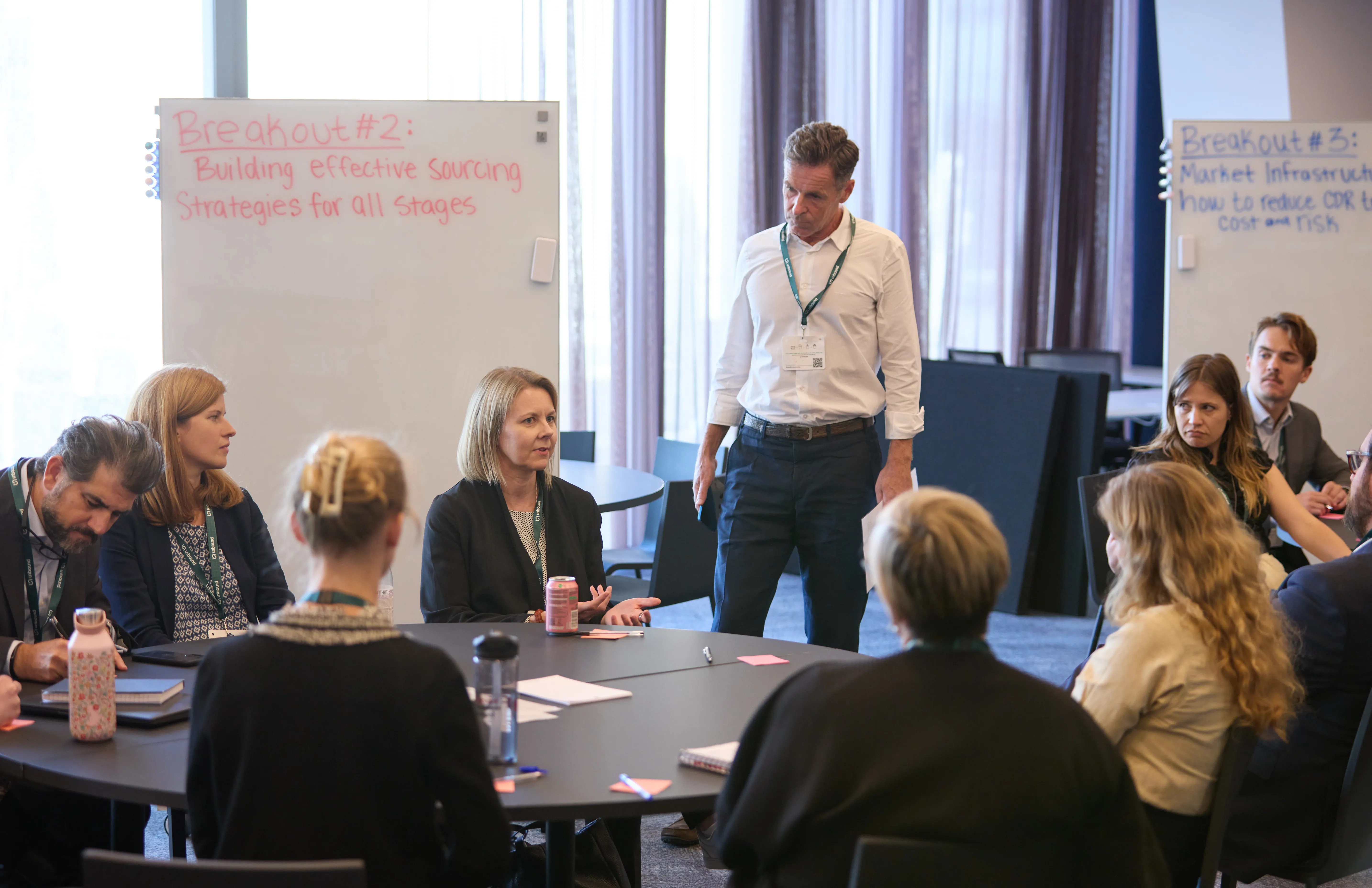
Carbon Unbound Europe 2026 took place in London - the continent’s defining CDR event of the year
Carbon Unbound Europe brought together 400 business leaders, investors, CDR buyers, and policymakers in London on October 20–21 for the flagship European carbon removal summit. The event covered CDR procurement, voluntary carbon market integrity, carbon storage infrastructure, and the EU policy pipeline, with sessions on topics ranging from the EU ETS carbon removal integration to corporate buyer strategy.
Citi structures first-of-its-kind $72 million outcome bond for Applied Carbon biochar, linking investor returns to carbon removal delivery
Citi has closed a $72 million, 3.5-year principal-protected Carbon Removal-Linked Note to finance Applied Carbon’s in-field biochar project in Texas — a first-of-its-kind financing structure in which investors forego traditional coupon payments in exchange for returns tied to the issuance and delivery of verified carbon removal credits. Nuveen co-invested in the note. Applied Carbon’s mobile pyrolysis technology converts agricultural crop residues into biochar directly in the field in a single pass, permanently sequestering carbon in soil. CEO Jason Aramburu described the structure as one that could “unlock capital for carbon removal at scale.”
Lula wins Brazil presidential runoff in historic upset — and what it means for the Amazon
President Luiz Inácio Lula da Silva won a fourth term on October 25, defeating Flávio Bolsonaro in a close runoff that defied pre-election polling which had shown Bolsonaro ahead. The result is historic — the first time since Brazil returned to direct elections in 1989 that a candidate has won the runoff after losing the first round. Bolsonaro reportedly refused to concede, sending markets into overnight volatility. Lula’s re-election secures Brazil’s commitment to zero illegal deforestation by 2030 and continued engagement with international carbon and forest markets, with COP30 scheduled for Belém in November 2027.
The Green Finance Institute launches 'Financing Resilience: The Untapped Adaptation Potential of CDR' report
Carbon credits can provide a valuable revenue stream, but GFI’s CDR Catalyst is increasingly seeing projects focus on multiple revenue streams and co-benefits with clear market value today, becoming more resilient to fluctuations in carbon credit demand and pricing, and providing more compelling investment cases to investors.
SHOWDOWN: Europe’s CDR Strategy: BioCCS vs Tech Neutral with Kaja Voss and Alastair Collier
Eve Tamme moderates our fifth SHOWDOWN debate, live on stage at Carbon Unbound Europe in London. The motion takes on one of the hottest fault lines in European carbon removal policy: should Europe’s CDR strategy put BioCCS (biogenic carbon capture and storage) first?

Carbon Unbound East Coast 2026 Report is LIVE
Access presentations, session recordings, interviews and more from our East Coast 2026 summit.
Terraset moves $2M+ to climate solutions
The NGO is adding new companies to their portfolio and getting creative with how they put more money behind existing ones. From algae pods cleaning sewer lagoons in Utah to biochar funding Ukraine’s national parks, each purchase had to do two things: directly unlock more capital and deliver impact beyond carbon removal.
What’s Missing in the EU’s Approach to Permanent Carbon Removal?
Carbon Unbound sat down with Chris Sherwood to discover how the EU ETS can bridge a multi-billion-euro price gap and scale permanent carbon removal to reach its 2040 target.
EU Parliament and Council strike deal to raise ETS Market Stability Reserve threshold to 700 million allowances
The European Parliament and Council of the EU reached a provisional agreement on October 21 to raise the threshold for permanently cancelling EU carbon allowances in the Market Stability Reserve from 400 million to 700 million - a change designed to reduce price volatility and support industrial competitiveness as the EU ETS tightens. The deal takes effect from January 1, 2031, and must still receive formal adoption from both institutions. A broader review of EU ETS rules is separately underway.
Amazon deforestation hits lowest level since records began in 1988, falling 42% in a year
Brazil’s space research agency INPE released data on October 16 showing that deforestation in the Amazon declined by 42% in the 12 months to July 2026, reaching just 3,335 square kilometres — the lowest annual figure since records began in 1988, and a 71% reduction over four years under President Lula. Deforestation and land-use change remain Brazil’s largest source of greenhouse gas emissions, making the result a significant development for both climate and voluntary carbon markets. The figures were released days before the October 25 presidential runoff.

Heidelberg Materials pauses its €191M GeZero cement carbon capture project in Germany, citing insufficient market and regulatory support
Heidelberg Materials has placed its GeZero CCS project at its Geseke cement plant in North Rhine-Westphalia on hold, stating that current market conditions and the regulatory framework do not provide a viable commercial foundation for the facility. Planned as Germany’s first fully decarbonised cement plant — and backed by €191 million from the EU Innovation Fund — GeZero was designed to capture 700,000 tonnes of CO2 annually using oxyfuel technology, with permanent offshore storage via the North Sea. The pause is a significant setback for industrial CCUS in Germany and raises questions about the bankability of CCS in the absence of stronger carbon pricing and contract-for-difference support.
Petronas, TotalEnergies, and Mitsui advance offshore Malaysian CO2 storage hub to serve Asian industrial emitters
The three-way partnership between Petronas, TotalEnergies, and Mitsui has progressed its plans to develop a commercial CO2 merchant storage hub in the Malay Basin, targeting industrial customers across Southeast Asia seeking geological storage for captured emissions. The collaboration evaluates saline aquifers and depleted offshore fields as storage sites and aims to develop the logistics and commercial framework for regional CO2 transport from industrial clusters across the continent.
Microsoft publishes procurement lessons from six years of carbon removal buying - warning of over-concentration risk for the market
Microsoft has released a paper sharing lessons from its carbon removal procurement programme, its first detailed public account of how it evaluates projects, manages delivery risk, and structures offtake agreements. The release comes as Bloomberg data showed Microsoft cut its CDR purchases by 80% in H1 2026 versus the same period in 2025 — and as market observers warned that the sector’s heavy dependence on a single buyer creates systemic fragility. Microsoft says it remains committed to removal but is applying greater discipline as it balances climate goals with AI infrastructure spending.
Relae launches new platform to speed up carbon removal buyer diligence and reduce time from interest to commitment
Relae (formerly Carbon Direct) has launched a digital platform designed to streamline the carbon removal procurement process for corporate buyers — providing structured project assessments, delivery risk scoring, and quality benchmarking in one place. The platform integrates the delivery risk framework from Relae’s sixth edition CDR quality criteria, released in September, and is designed to reduce the time buyers spend in pre-purchase diligence.
California moves toward first-in-the-nation state-level rules covering both carbon capture and carbon removal
California’s Air Resources Board has moved forward with rulemaking that would establish the first state-level regulatory framework in the US covering both point-source carbon capture and atmospheric carbon dioxide removal — a significant policy development that could shape how CDR projects are permitted, verified, and credited at the sub-federal level and may serve as a model for other US states.
Singapore pledges $112 million for industrial decarbonisation research, targeting CCUS and low-carbon manufacturing
Singapore has committed $112 million to fund research and development in industrial decarbonisation, with carbon capture, utilisation, and storage among the priority areas. The investment supports Singapore’s broader strategy to position itself as a regional CCUS hub and its expansion of industrial clean technology capacity ahead of its 2050 net zero target — closely linked to Carbon Unbound Asia’s February 2027 launch in the city-state.
Skytree, Galetech, and Mwahera partner to deploy direct air capture in Kenya for e-fuel production
Dutch DAC company Skytree has entered a three-way partnership with Kenyan clean energy developer Galetech and Mwahera to deploy a Skypark-model direct air capture system in Kenya, supplying captured CO2 as feedstock for e-fuel production using the country’s abundant geothermal and renewable energy. The partnership is the first deployment of Skytree’s regional DAC-as-a-service model in Africa, extending beyond its existing Skypark pipeline in Iceland and the Netherlands.
Congress weighs 180-day deadline for EPA Class VI carbon storage permitting as backlog threatens US CCS pipeline
US legislators are considering a bill that would impose a 180-day mandatory deadline on the Environmental Protection Agency for processing Class VI underground injection control well permit decisions, in response to a growing backlog that is stalling carbon capture and storage projects across the country. Colorado’s recent EPA primacy approval is one response to the problem, but developers argue that federal-level delays continue to create uncertainty for investment decisions.
South Pole: only 12% of companies are positioned to turn climate action into measurable business value
South Pole’s latest corporate climate action report finds that despite widespread sustainability commitments, only 12% of companies have the strategic alignment, internal capabilities, and market access to convert their climate investments into quantifiable business outcomes — including cost savings, revenue opportunities, and risk reduction. The finding underscores the gap between stated net zero ambitions and operational climate integration across the corporate sector.
Welcome to Carbon Insider - Carbon Unbound's weekly briefing on the deals, data, and developments shaping the global carbon removal market. Let's get into it. Have we missed anything? Get in touch here to send news for feature or publish.
Carbon Unbound Europe 2026 took place in London - the continent’s defining CDR event of the year
Carbon Unbound Europe brought together 400 business leaders, investors, CDR buyers, and policymakers in London on October 20–21 for the flagship European carbon removal summit. The event covered CDR procurement, voluntary carbon market integrity, carbon storage infrastructure, and the EU policy pipeline, with sessions on topics ranging from the EU ETS carbon removal integration to corporate buyer strategy.
Citi structures first-of-its-kind $72 million outcome bond for Applied Carbon biochar, linking investor returns to carbon removal delivery
Citi has closed a $72 million, 3.5-year principal-protected Carbon Removal-Linked Note to finance Applied Carbon’s in-field biochar project in Texas — a first-of-its-kind financing structure in which investors forego traditional coupon payments in exchange for returns tied to the issuance and delivery of verified carbon removal credits. Nuveen co-invested in the note. Applied Carbon’s mobile pyrolysis technology converts agricultural crop residues into biochar directly in the field in a single pass, permanently sequestering carbon in soil. CEO Jason Aramburu described the structure as one that could “unlock capital for carbon removal at scale.”
Lula wins Brazil presidential runoff in historic upset — and what it means for the Amazon
President Luiz Inácio Lula da Silva won a fourth term on October 25, defeating Flávio Bolsonaro in a close runoff that defied pre-election polling which had shown Bolsonaro ahead. The result is historic — the first time since Brazil returned to direct elections in 1989 that a candidate has won the runoff after losing the first round. Bolsonaro reportedly refused to concede, sending markets into overnight volatility. Lula’s re-election secures Brazil’s commitment to zero illegal deforestation by 2030 and continued engagement with international carbon and forest markets, with COP30 scheduled for Belém in November 2027.
The Green Finance Institute launches 'Financing Resilience: The Untapped Adaptation Potential of CDR' report
Carbon credits can provide a valuable revenue stream, but GFI’s CDR Catalyst is increasingly seeing projects focus on multiple revenue streams and co-benefits with clear market value today, becoming more resilient to fluctuations in carbon credit demand and pricing, and providing more compelling investment cases to investors.
SHOWDOWN: Europe’s CDR Strategy: BioCCS vs Tech Neutral with Kaja Voss and Alastair Collier
Eve Tamme moderates our fifth SHOWDOWN debate, live on stage at Carbon Unbound Europe in London. The motion takes on one of the hottest fault lines in European carbon removal policy: should Europe’s CDR strategy put BioCCS (biogenic carbon capture and storage) first?
Carbon Unbound East Coast 2026 Report is LIVE
Access presentations, session recordings, interviews and more from our East Coast 2026 summit.
Terraset moves $2M+ to climate solutions
The NGO is adding new companies to their portfolio and getting creative with how they put more money behind existing ones. From algae pods cleaning sewer lagoons in Utah to biochar funding Ukraine’s national parks, each purchase had to do two things: directly unlock more capital and deliver impact beyond carbon removal.
What’s Missing in the EU’s Approach to Permanent Carbon Removal?
Carbon Unbound sat down with Chris Sherwood to discover how the EU ETS can bridge a multi-billion-euro price gap and scale permanent carbon removal to reach its 2040 target.
EU Parliament and Council strike deal to raise ETS Market Stability Reserve threshold to 700 million allowances
The European Parliament and Council of the EU reached a provisional agreement on October 21 to raise the threshold for permanently cancelling EU carbon allowances in the Market Stability Reserve from 400 million to 700 million - a change designed to reduce price volatility and support industrial competitiveness as the EU ETS tightens. The deal takes effect from January 1, 2031, and must still receive formal adoption from both institutions. A broader review of EU ETS rules is separately underway.
Amazon deforestation hits lowest level since records began in 1988, falling 42% in a year
Brazil’s space research agency INPE released data on October 16 showing that deforestation in the Amazon declined by 42% in the 12 months to July 2026, reaching just 3,335 square kilometres — the lowest annual figure since records began in 1988, and a 71% reduction over four years under President Lula. Deforestation and land-use change remain Brazil’s largest source of greenhouse gas emissions, making the result a significant development for both climate and voluntary carbon markets. The figures were released days before the October 25 presidential runoff.
Heidelberg Materials pauses its €191M GeZero cement carbon capture project in Germany, citing insufficient market and regulatory support
Heidelberg Materials has placed its GeZero CCS project at its Geseke cement plant in North Rhine-Westphalia on hold, stating that current market conditions and the regulatory framework do not provide a viable commercial foundation for the facility. Planned as Germany’s first fully decarbonised cement plant — and backed by €191 million from the EU Innovation Fund — GeZero was designed to capture 700,000 tonnes of CO2 annually using oxyfuel technology, with permanent offshore storage via the North Sea. The pause is a significant setback for industrial CCUS in Germany and raises questions about the bankability of CCS in the absence of stronger carbon pricing and contract-for-difference support.
Petronas, TotalEnergies, and Mitsui advance offshore Malaysian CO2 storage hub to serve Asian industrial emitters
The three-way partnership between Petronas, TotalEnergies, and Mitsui has progressed its plans to develop a commercial CO2 merchant storage hub in the Malay Basin, targeting industrial customers across Southeast Asia seeking geological storage for captured emissions. The collaboration evaluates saline aquifers and depleted offshore fields as storage sites and aims to develop the logistics and commercial framework for regional CO2 transport from industrial clusters across the continent.
Microsoft publishes procurement lessons from six years of carbon removal buying - warning of over-concentration risk for the market
Microsoft has released a paper sharing lessons from its carbon removal procurement programme, its first detailed public account of how it evaluates projects, manages delivery risk, and structures offtake agreements. The release comes as Bloomberg data showed Microsoft cut its CDR purchases by 80% in H1 2026 versus the same period in 2025 — and as market observers warned that the sector’s heavy dependence on a single buyer creates systemic fragility. Microsoft says it remains committed to removal but is applying greater discipline as it balances climate goals with AI infrastructure spending.
Relae launches new platform to speed up carbon removal buyer diligence and reduce time from interest to commitment
Relae (formerly Carbon Direct) has launched a digital platform designed to streamline the carbon removal procurement process for corporate buyers — providing structured project assessments, delivery risk scoring, and quality benchmarking in one place. The platform integrates the delivery risk framework from Relae’s sixth edition CDR quality criteria, released in September, and is designed to reduce the time buyers spend in pre-purchase diligence.
California moves toward first-in-the-nation state-level rules covering both carbon capture and carbon removal
California’s Air Resources Board has moved forward with rulemaking that would establish the first state-level regulatory framework in the US covering both point-source carbon capture and atmospheric carbon dioxide removal — a significant policy development that could shape how CDR projects are permitted, verified, and credited at the sub-federal level and may serve as a model for other US states.
Singapore pledges $112 million for industrial decarbonisation research, targeting CCUS and low-carbon manufacturing
Singapore has committed $112 million to fund research and development in industrial decarbonisation, with carbon capture, utilisation, and storage among the priority areas. The investment supports Singapore’s broader strategy to position itself as a regional CCUS hub and its expansion of industrial clean technology capacity ahead of its 2050 net zero target — closely linked to Carbon Unbound Asia’s February 2027 launch in the city-state.
Skytree, Galetech, and Mwahera partner to deploy direct air capture in Kenya for e-fuel production
Dutch DAC company Skytree has entered a three-way partnership with Kenyan clean energy developer Galetech and Mwahera to deploy a Skypark-model direct air capture system in Kenya, supplying captured CO2 as feedstock for e-fuel production using the country’s abundant geothermal and renewable energy. The partnership is the first deployment of Skytree’s regional DAC-as-a-service model in Africa, extending beyond its existing Skypark pipeline in Iceland and the Netherlands.
Congress weighs 180-day deadline for EPA Class VI carbon storage permitting as backlog threatens US CCS pipeline
US legislators are considering a bill that would impose a 180-day mandatory deadline on the Environmental Protection Agency for processing Class VI underground injection control well permit decisions, in response to a growing backlog that is stalling carbon capture and storage projects across the country. Colorado’s recent EPA primacy approval is one response to the problem, but developers argue that federal-level delays continue to create uncertainty for investment decisions.
South Pole: only 12% of companies are positioned to turn climate action into measurable business value
South Pole’s latest corporate climate action report finds that despite widespread sustainability commitments, only 12% of companies have the strategic alignment, internal capabilities, and market access to convert their climate investments into quantifiable business outcomes — including cost savings, revenue opportunities, and risk reduction. The finding underscores the gap between stated net zero ambitions and operational climate integration across the corporate sector.